注册账号 | 忘记密码

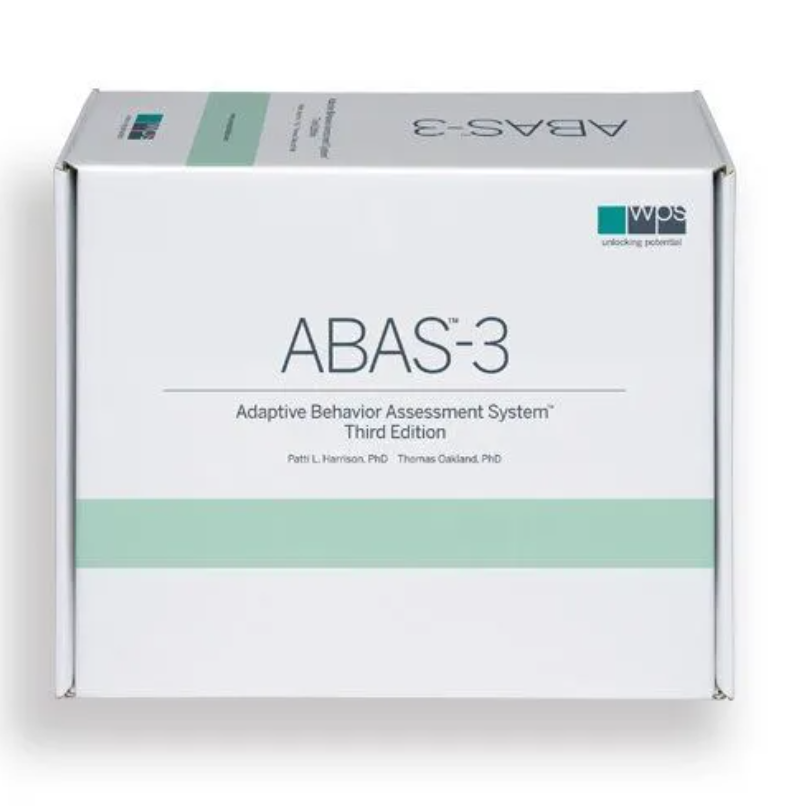
The ABAS-3 includes five rating forms, each for a specific age range and rater:
Parents, family members, teachers, daycare staff, supervisors, counselors, or others who are familiar with the daily activities of the individual being evaluated can complete these forms. The Adult Form can even be administered as a self-reporting tool. The items may be read aloud to raters who have low sight or poor reading skills.
Although it’s possible to evaluate adaptive skills using only a single rater, gathering ratings from several people will provide a more complete assessment. Multiple ratings show how the individual performs in various settings. When different forms are used by different raters to evaluate an individual’s adaptive skills, a comparative report can be generated to show areas that warrant further attention.
The ABAS-3 covers three broad adaptive domains: Conceptual, Social, and Practical. Within these domains, the ABAS-3 assesses 11 adaptive skill areas (each form assesses 9 or 10 skill areas based on age range). Items focus on practical, everyday activities required to function, meet environmental demands, care for oneself, and interact with others effectively and independently. Raters use a four-point response scale to indicate whether the individual can perform each activity and, if so, how frequently the individual performs it when needed.
The ABAS-3 is aligned with the AAIDD, DSM-5, and IDEA specifications and works well within an RTI context. The ABAS-3 generates norm-referenced scaled scores and test-age equivalents for the 11 skill areas. It also provides standard scores, confidence intervals, and percentile ranks for the three broad adaptive domains and for the summary score—the General Adaptive Composite. Scores can also be categorized descriptively (Extremely Low, Low, Below Average, Average, Above Average, High).
The WPS® Online Evaluation System™ offers convenient ABAS-3 administration, scoring, and intervention planning. Online testing allows clinicians to:
The ABAS-3 can also be administered using paper-and-pencil forms that have been redesigned for ease of use. Scoring can be done quickly by hand or by desktop software. The Unlimited-Use Scoring Assistant and Intervention Planner Software generates a narrative interpretation of all scores, a strengths and needs analysis, a composite score discrepancy analysis, and more.
Create and achieve therapeutic goals with the ABAS-3 Intervention Planner. Available in three formats—online, software, and print—it allows users to create a customized therapy plan based on areas of adaptive skill deficits identified by the ABAS-3. The Intervention Planner offers:
The Intervention Planner is included in all ABAS-3 Kits and may be purchased separately in print.
Measuring adaptive skills is important when a disorder or other condition affects an individual’s daily functioning. Whether clinicians are trying to identify the best learning environment for a child or are ensuring that an older individual can live independently, the ABAS-3 provides the information necessary to make appropriate clinical decisions and design effective interventions. Its applications are almost endless.
No matter the setting, the age of the individual, or the nature of their limitations, the ABAS-3 can help clinicians:
This versatile instrument lets clinicians gather information from several raters in different settings to obtain a broad view of an individual’s functionality. The ABAS-3 conforms to AAIDD, DSM-5, IDEA, and RTI specifications and can be used with confidence.
 心理评估/干预工具平台
地址:深圳市福田区南园路68号上步大厦5楼5F
电话:0755-2396 4819
邮箱:service@chromagenlens.net
 官方微信手机版